Guide
Handheld Oscilloscope Multimeter UK Guide | ScopeMeter
Choose a handheld oscilloscope multimeter for field and bench work. Compare bandwidth, sample rate, channels, safety category and honest UK support.
Read the guide →Practical UK guidance for choosing and using electrical test equipment, with clear product boundaries, safety limits and links to the underlying sources.
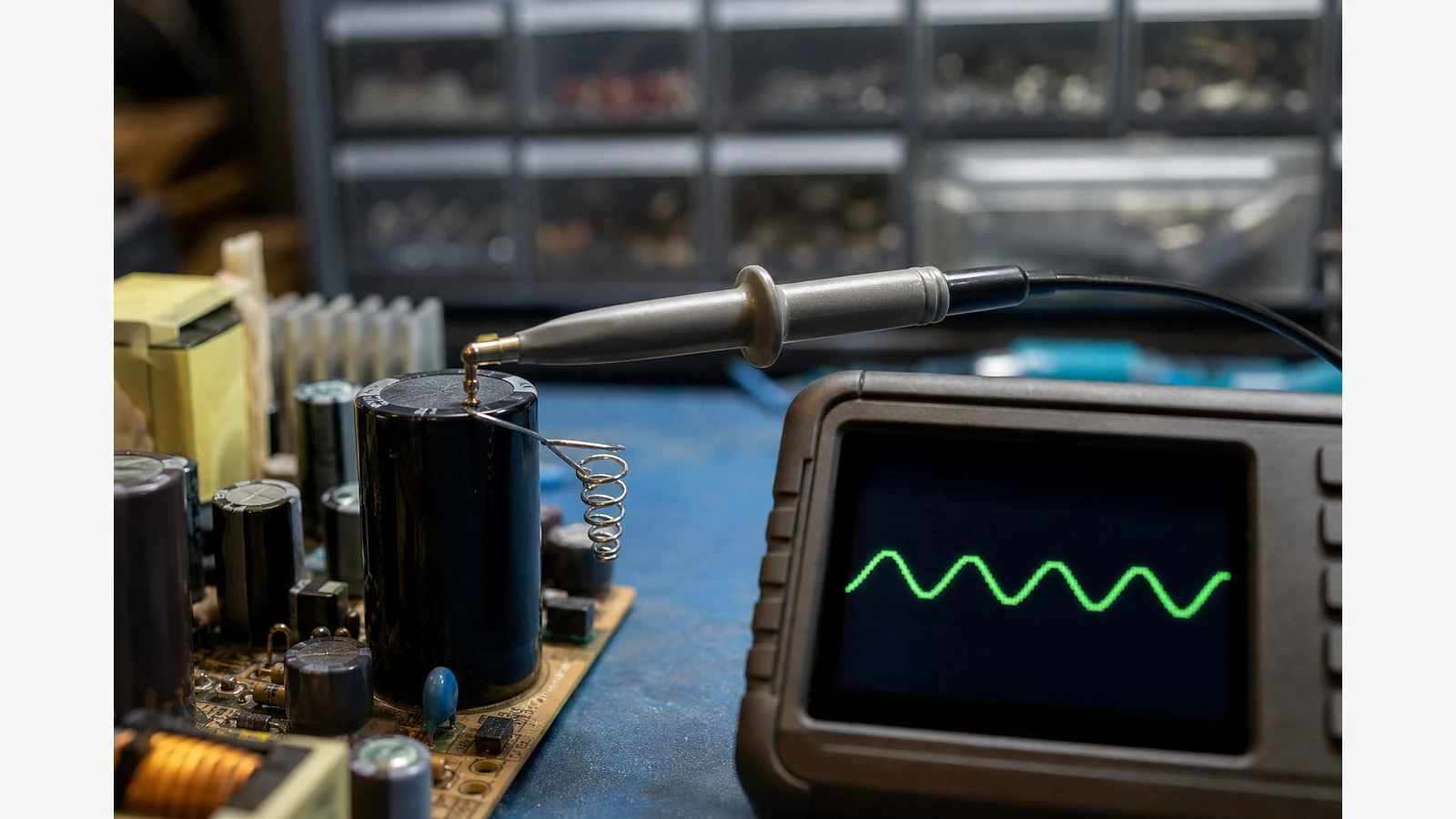
Why multimeters hide ripple, and a UK bench checklist: AC coupling, short grounds, sensitivity and bandwidth-limit habits for PSU and DC-DC checks.
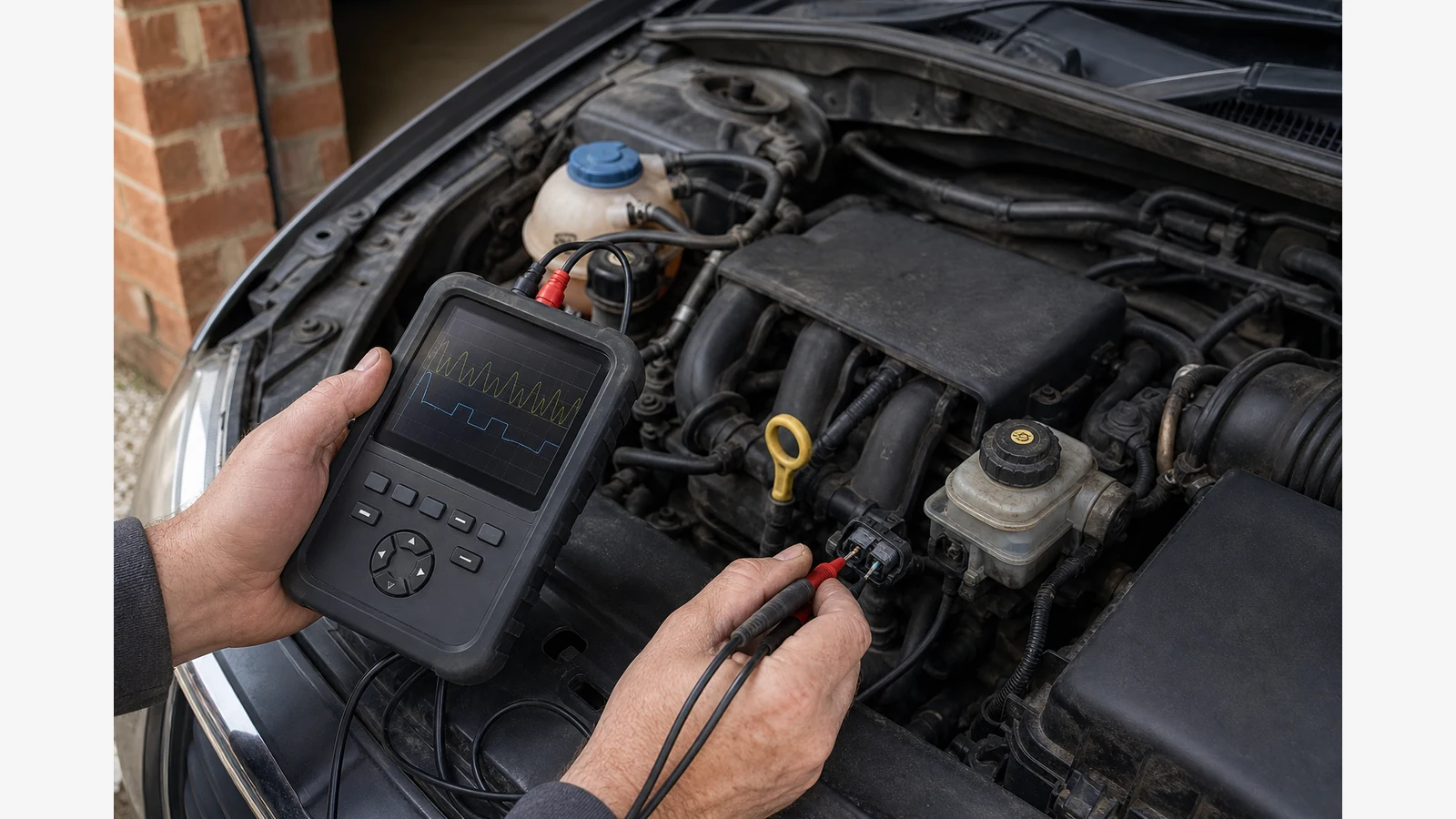
Why car sensor faults need waveforms, not only codes: safe 12 V DIY limits, a dual-channel checklist, and when to stop and use a garage or Pico-class kit.
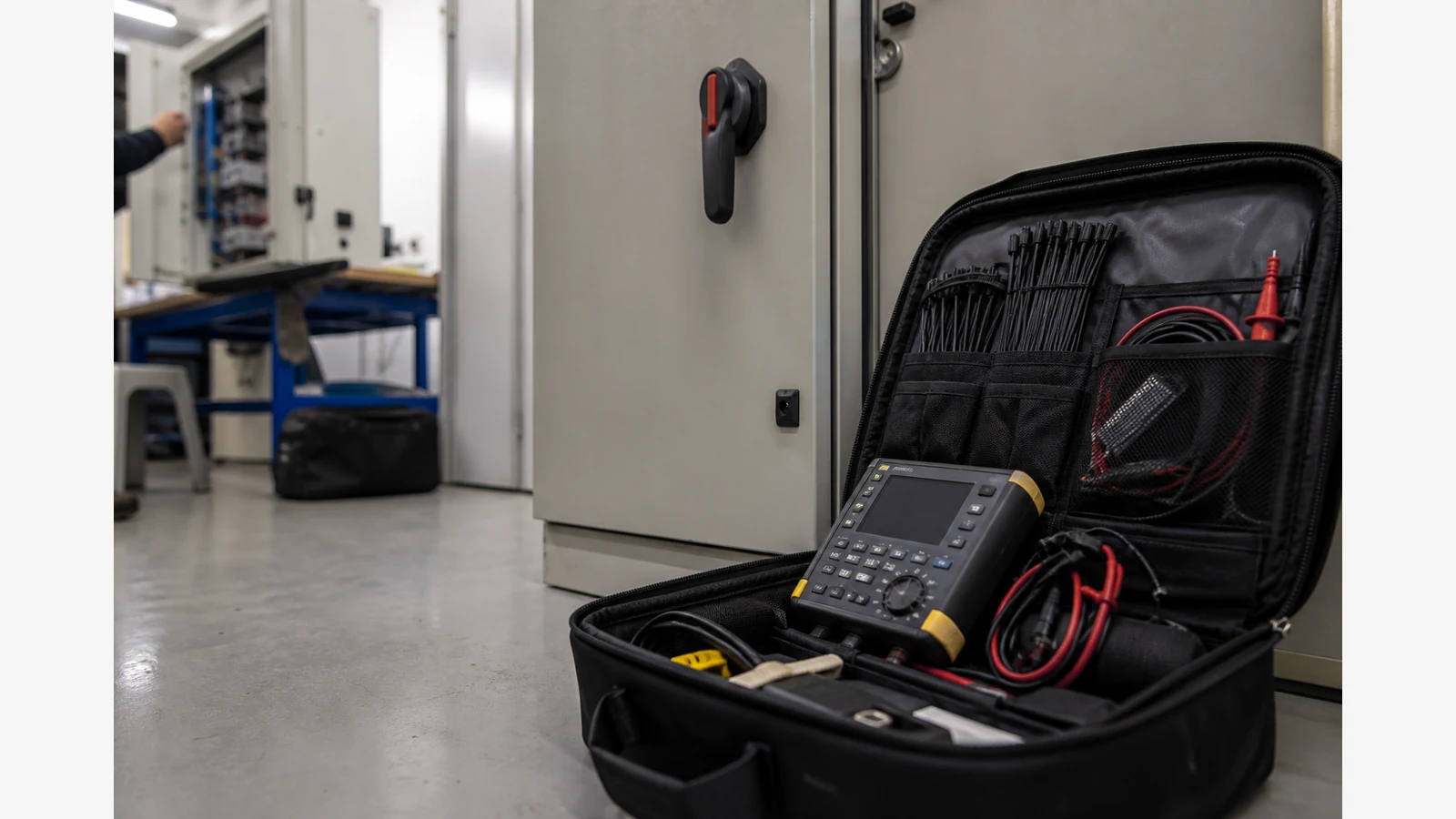
What UK field engineers should pack when a bench scope will not travel: weight, CAT limits, a meter-first sequence, and when industrial ScopeMeters are required.
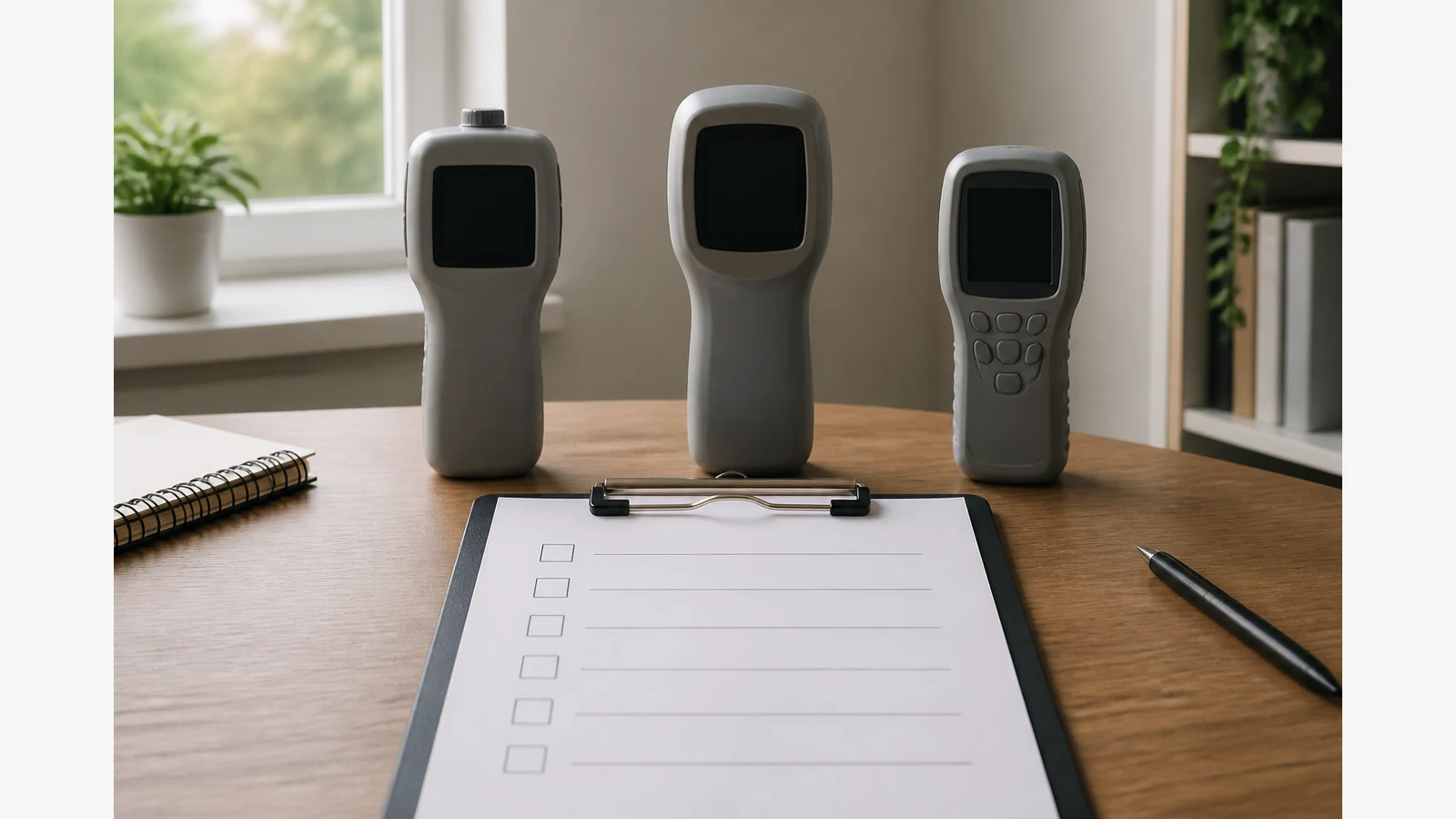
Compare FNIRSI and Hantek entry handhelds without chasing MHz alone: integration, documentation, UK support cues, and where a balanced 3-in-1 fits.
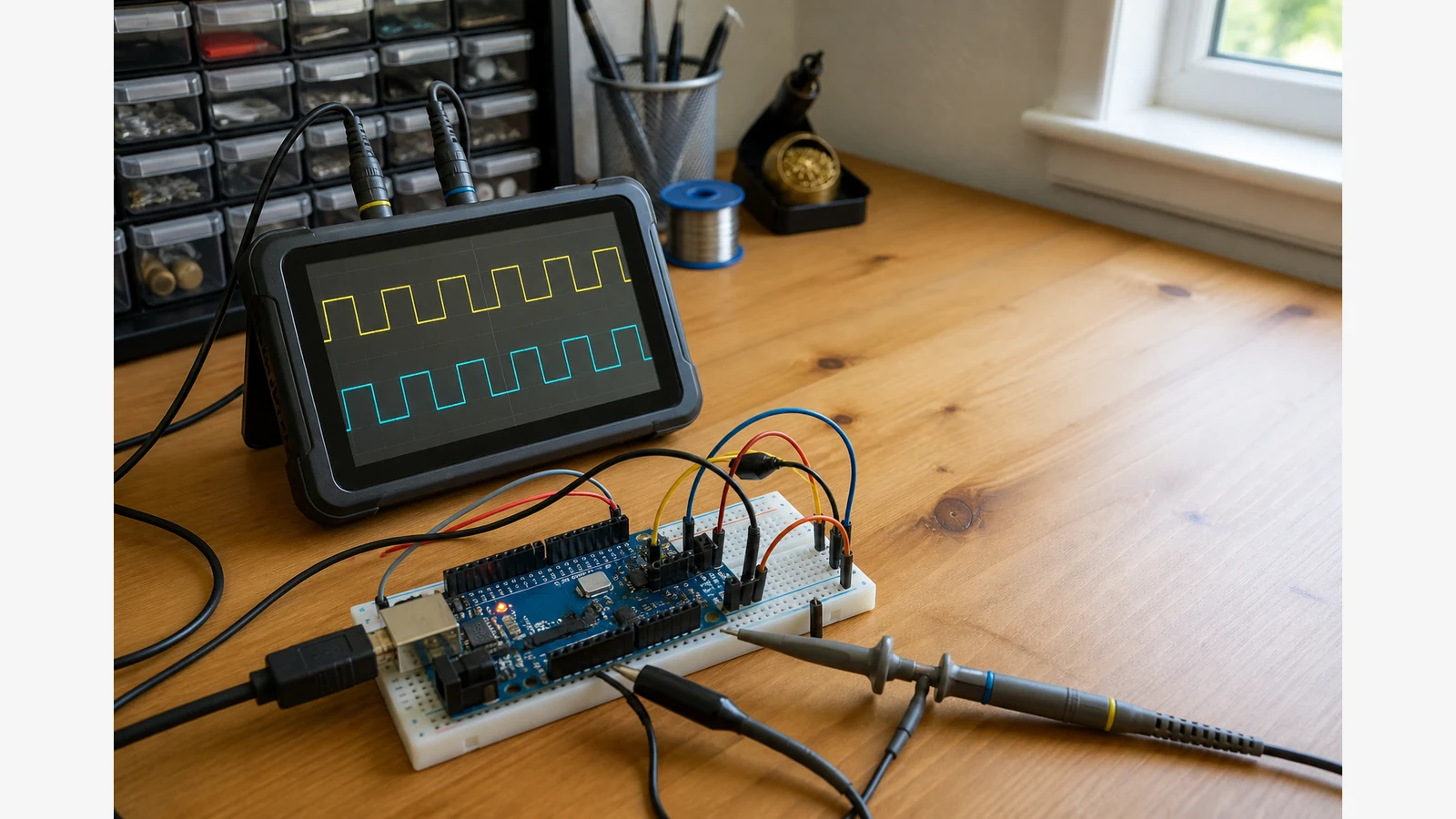
Learn when an Arduino project needs a scope, what 20–50 MHz handhelds can show for PWM and sensors, and how UK beginners should choose without overbuying.
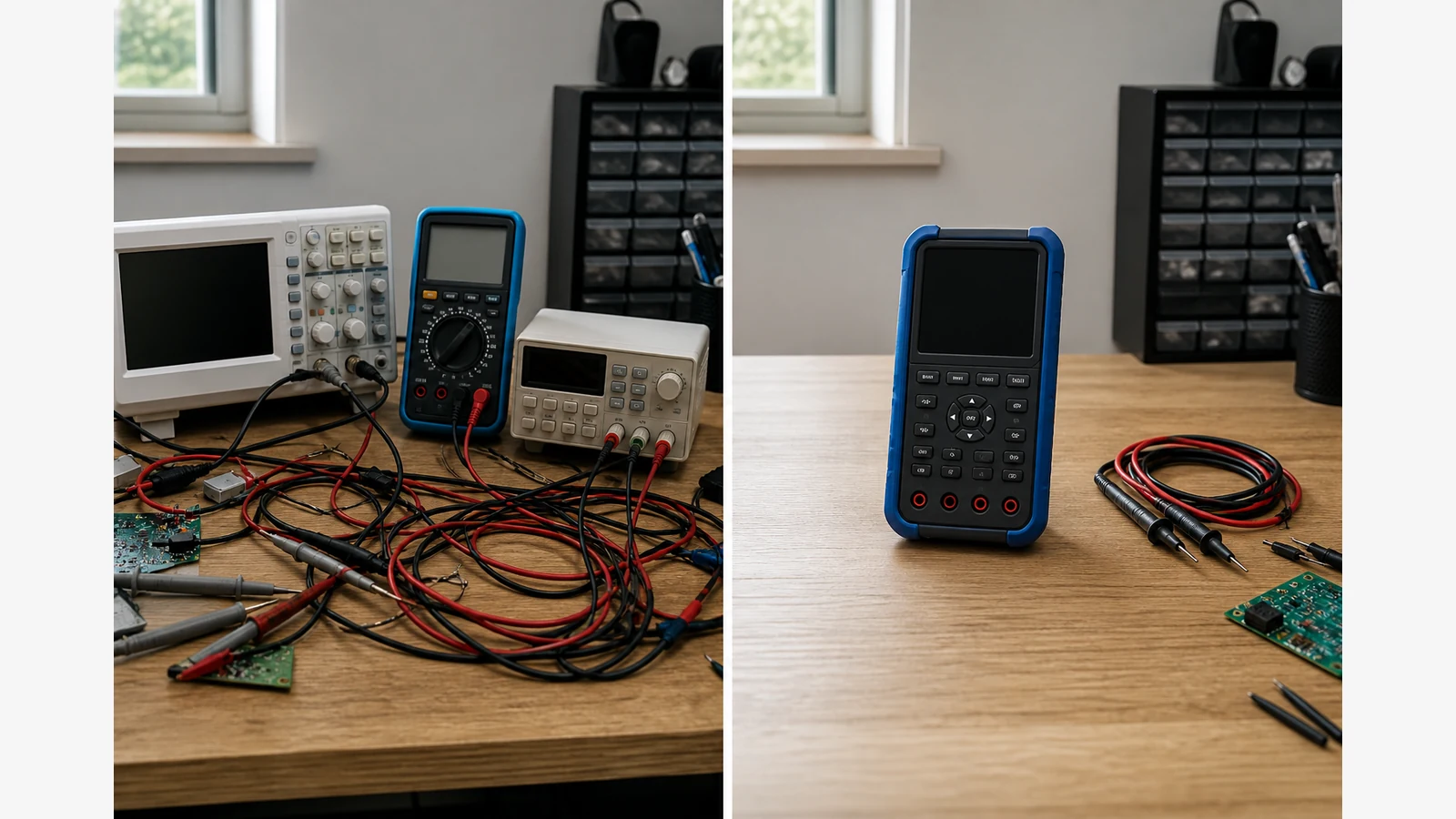
When one handheld scope and True RMS meter beats a second bag: what to check, and which jobs still need a bench instrument.
Guide
Choose a handheld oscilloscope multimeter for field and bench work. Compare bandwidth, sample rate, channels, safety category and honest UK support.
Read the guide →Guide
Learn how to test an alternator with a multimeter: battery checks, safe probe placement, loaded readings and when a UK vehicle needs professional diagnosis.
Read the guide →Guide
Understand what a lux multimeter measures, how a light sensor changes the job and why an ordinary electrical multimeter cannot provide a lux reading.
Read the guide →Guide
Choose a clamp multimeter by conductor access, AC or DC current, jaw size, safety category and measurement needs—without paying for unsuitable features.
Read the guide →Guide
Choose and use a multimeter for Arduino projects. Check rails, continuity and components safely, understand limits, and know when a waveform needs a scope.
Read the guide →Guide
Compare an analogue multimeter vs digital meter for trend spotting, resistance checks and repair work, with clear limits and practical UK buying criteria.
Read the guide →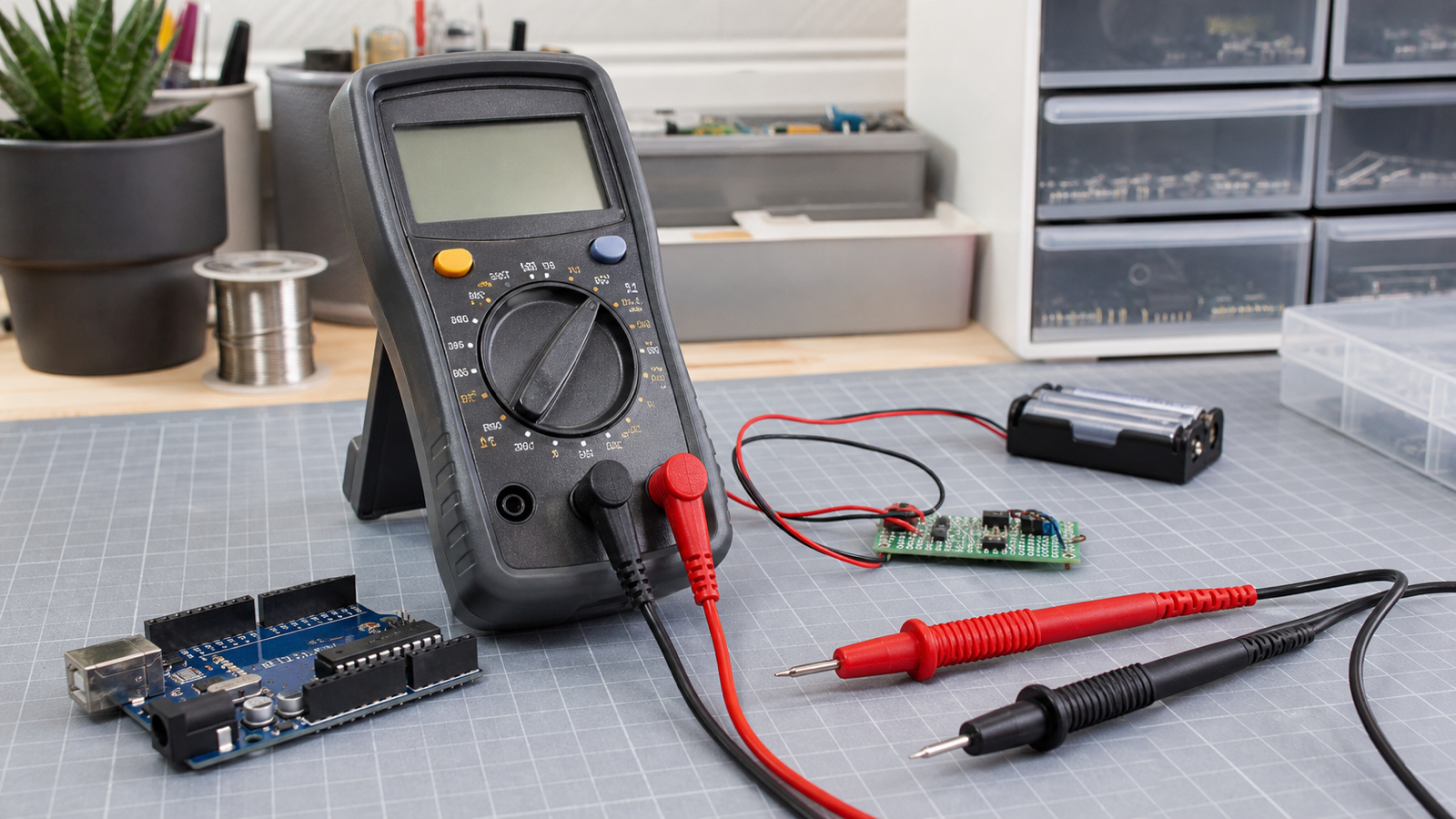
Choose a multimeter for electronics, Arduino, automotive or electrical work by checking safety category, input protection, functions, leads and accuracy.
Learn how to test an alternator with a multimeter: battery checks, safe probe placement, loaded readings and when a UK vehicle needs professional diagnosis.
Choose a handheld oscilloscope multimeter for field and bench work. Compare bandwidth, sample rate, channels, safety category and honest UK support.
Understand what a lux multimeter measures, how a light sensor changes the job and why an ordinary electrical multimeter cannot provide a lux reading.
Choose a clamp multimeter by conductor access, AC or DC current, jaw size, safety category and measurement needs—without paying for unsuitable features.
Compare an analogue multimeter vs digital meter for trend spotting, resistance checks and repair work, with clear limits and practical UK buying criteria.
What UK field engineers should pack when a bench scope will not travel: weight, CAT limits, a meter-first sequence, and when industrial ScopeMeters are required.
Learn when an Arduino project needs a scope, what 20–50 MHz handhelds can show for PWM and sensors, and how UK beginners should choose without overbuying.
Why multimeters hide ripple, and a UK bench checklist: AC coupling, short grounds, sensitivity and bandwidth-limit habits for PSU and DC-DC checks.
Why car sensor faults need waveforms, not only codes: safe 12 V DIY limits, a dual-channel checklist, and when to stop and use a garage or Pico-class kit.
Compare FNIRSI and Hantek entry handhelds without chasing MHz alone: integration, documentation, UK support cues, and where a balanced 3-in-1 fits.
When one handheld scope and True RMS meter beats a second bag: what to check, and which jobs still need a bench instrument.