Multimeter Clamp Explained: A UK Buyer's Guide
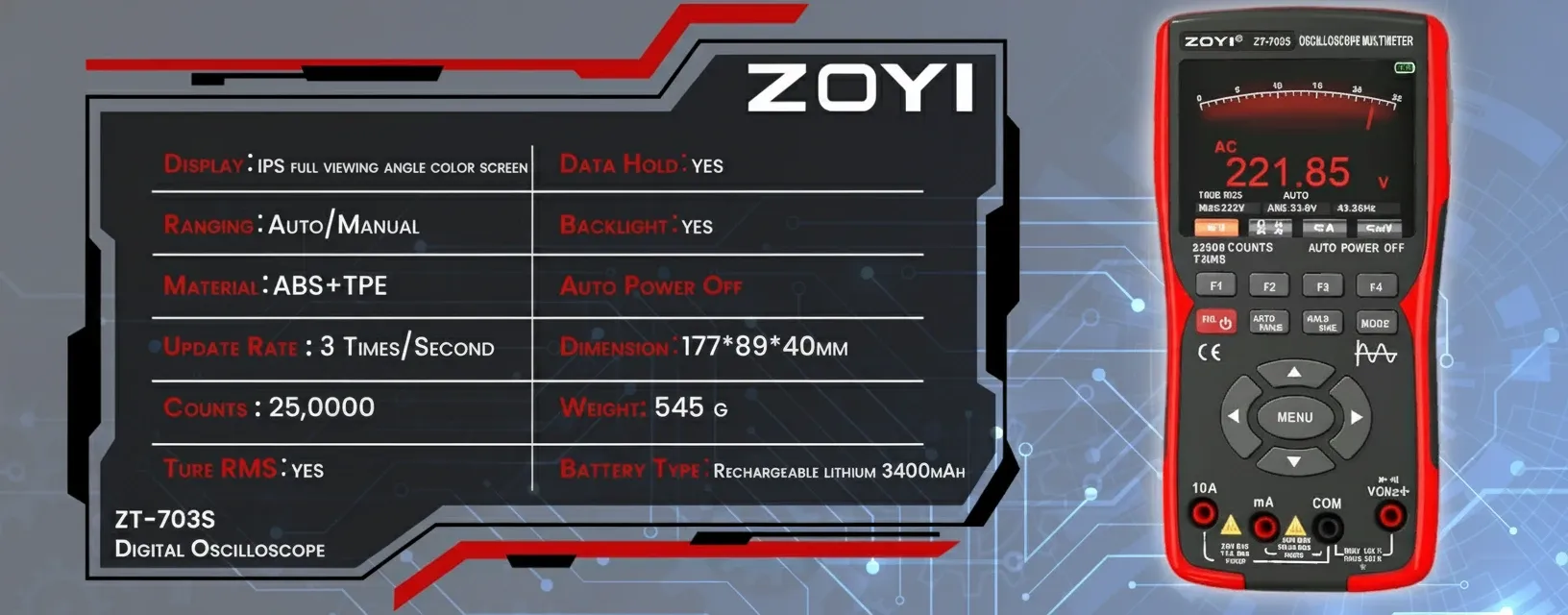
A multimeter clamp, also called a clamp meter, is a test instrument that measures electrical current by clamping around a single conductor, so you do not need to break the circuit. In practice, it is the safest and quickest way to measure current on many UK electrical systems, and many models also work as standard digital multimeters for voltage, resistance and continuity checks.
TL;DR: If you need to measure current safely on live circuits, a multimeter clamp is usually the right tool. Choose AC-only models for general mains work, or a Hall Effect model for AC and DC systems such as vehicles, batteries and solar PV. For UK use, prioritise a suitable CAT rating, True-RMS readings and clear compliance marking.
In the demanding world of UK electrical maintenance and diagnostics, efficiency and safety are the twin pillars of a successful job. For years, measuring current required the intrusive and often hazardous process of breaking a circuit to wire a meter in series. However, the advent of the multimeter clamp changed this paradigm entirely. By leveraging electromagnetic induction or Hall Effect sensing, these tools allow electricians to measure live current without stripping a single wire or interrupting power to critical systems.
Whether you are a commercial sparky working on a distribution board in a London office block or a DIY user troubleshooting a domestic circuit, understanding the nuances of the multimeter clamp is essential. Therefore, this guide explains what it is, how it works, which safety standards matter in the UK, and how to choose the right instrument for your diagnostic needs.
What should you know before buying a multimeter clamp?
- Non-invasive current measurement: A multimeter clamp measures current via the magnetic field around a conductor, so there is no need to disconnect wiring.
- UK safety matters: For mains work, look for appropriate UKCA/CE marking and a suitable CAT rating, typically CAT III or CAT IV depending on the point of test.
- More than current: Many clamp meters also measure voltage, resistance, continuity and sometimes capacitance, frequency and temperature.
- AC and DC are not the same: Not every multimeter clamp measures DC current. If you work on automotive, battery or solar systems, choose a Hall Effect model.
What is a multimeter clamp?
At its core, a multimeter clamp is an electrical tester that combines the functions of a basic digital multimeter with a current sensor built into clamp jaws. The jaws open and close around a single conductor, and the instrument reads the current flowing through that conductor by sensing its magnetic field.
Unlike a standard digital multimeter, which usually needs test leads connected directly into the circuit, a multimeter clamp measures current externally. As a result, it is especially useful for high-current work, fault-finding on live installations and quick checks where isolating the circuit is impractical.
This tool is particularly valuable when measuring currents that would exceed the fused current input of a standard handheld meter. In the UK, where domestic circuits may include 32A ring finals and commercial or industrial installations can be far higher, the ability to measure current safely and quickly is both a practical advantage and an important safety consideration.
Why do electricians use a multimeter clamp?
Based on our testing of handheld electrical test equipment in typical field conditions, clamp meters are often the fastest option for current checks on pumps, motors, HVAC systems, distribution boards and consumer units. In addition, they reduce the risk of incorrect lead placement when compared with in-series current measurement.
While some technicians still carry a non-digital multimeter for specific analogue observations, the multimeter clamp has become the all-rounder for many field engineers. It offers the portability of a handheld device together with current-measuring capability that a standard meter cannot match as conveniently.
How does a multimeter clamp work?
The way a multimeter clamp works depends on whether it is measuring AC only or both AC and DC. Therefore, understanding the sensing method is important before you buy, especially if you work across mains, automotive and renewable systems.
How does an AC clamp meter measure current?
Most entry-level multimeter clamps use current transformer technology. The jaws form part of a magnetic core, and the conductor inside the jaws acts like the primary winding of a transformer. As alternating current flows, it creates a changing magnetic field, which induces a corresponding signal inside the meter. The instrument then converts that signal into a current reading.
This method is accurate and reliable for AC systems, but it does not measure DC current. So, if you clamp it around a DC cable, you may see no useful reading at all.
Can a multimeter clamp measure DC current?
Yes, but only if the clamp uses a Hall Effect sensor. Hall Effect clamps detect both changing and static magnetic fields, which means they can measure AC and DC current. That makes them suitable for British automotive diagnostics, battery banks, EV-related maintenance and the growing UK solar PV sector.
In short, if your work includes inverters, battery storage or vehicle electrics, a Hall Effect multimeter clamp is usually the better long-term choice.
Is a multimeter clamp safe for UK electrical work?
Yes, provided you use the right instrument for the environment and follow safe isolation procedures. According to UK guidance and established industry practice under the IET Wiring Regulations (BS 7671), test equipment must be suitable for the installation category, voltage level and likely transient overvoltage exposure.
According to the Health and Safety Executive (HSE), electrical shock and burn incidents remain a serious workplace risk in the UK. Consequently, using a multimeter clamp with an inadequate safety rating can expose the user to dangerous transient spikes, especially near distribution equipment and incoming supplies.
What CAT rating do you need on a multimeter clamp?
When buying a multimeter clamp, check the Overvoltage Category, usually shown as CAT II, CAT III or CAT IV. This rating indicates how much transient energy the instrument is designed to withstand.
- CAT II: Appliance-level and receptacle-connected loads.
- CAT III: Distribution circuits, fixed installations and many consumer unit or commercial board applications.
- CAT IV: The origin of the installation, including service entrances, electricity meters and external supply points.
For most professional UK mains work, a CAT III 600V or CAT IV 300V rating is commonly regarded as the minimum sensible starting point. Nevertheless, always match the rating to the exact test location rather than relying on a general rule of thumb.
What features should a good multimeter clamp have?
Not all clamp meters are equally capable. If you want a reliable multimeter clamp for UK electrical diagnostics, several features make a noticeable difference in day-to-day use.
Why is True-RMS important on a multimeter clamp?
In modern UK homes, offices and plant rooms, loads are often non-linear. LED lighting, switched-mode power supplies, drives and electronic controls distort the waveform. As a result, an average-responding meter can produce misleading readings. A True-RMS multimeter clamp calculates the effective heating value more accurately, even when the waveform is not a clean sine wave.
Based on our testing around variable-speed equipment and electronic loads, True-RMS capability is one of the most useful upgrades for anyone working beyond very basic domestic fault-finding.
What is inrush current on a clamp meter?
Inrush current is the brief startup surge drawn by motors, compressors, transformers and some power supplies. A clamp with an inrush function captures this short-duration peak, helping you assess startup behaviour and diagnose nuisance tripping.
For example, HVAC engineers working on heat pumps, extract systems or boiler pumps in the UK often need this function to distinguish between normal startup current and a genuine fault condition.
Is non-contact voltage useful on a multimeter clamp?
Yes, as a quick preliminary check. Many modern clamps include non-contact voltage (NCV) detection, which can indicate the presence of live voltage without touching exposed conductors. However, it does not replace a proper two-pole tester or approved safe isolation procedure when proving dead.
Therefore, NCV is best treated as a convenience feature rather than a final safety decision-maker.
Multimeter clamp vs standard multimeter: which is better?
The better tool depends on what you are measuring. A multimeter clamp is usually better for current measurement on live conductors, while a standard multimeter is often better for low-current electronics, detailed voltage checks and bench diagnostics.
When should you use a multimeter clamp instead of a standard multimeter?
Use a multimeter clamp when you need to:
- measure current without breaking the circuit;
- check current draw on motors, pumps, heaters or distribution circuits;
- work quickly in live diagnostic situations;
- reduce disruption to critical systems.
When is a standard multimeter better than a clamp meter?
A standard multimeter is usually better when you need:
- very low current measurements such as milliamps or microamps;
- precise resistance checks on components or circuits;
- fine electronics troubleshooting;
- compact probing in tight PCB or terminal areas.
For many UK electricians and maintenance engineers, the most practical answer is not one or the other, but both.
How do you use a multimeter clamp correctly?
To get an accurate reading, clamp around one conductor only. If you clamp around live and neutral together, the opposing magnetic fields cancel each other out, and the meter will usually read near zero.
For best results:
- select the correct function and range before clamping;
- centre the conductor within the jaws where possible;
- ensure the jaws are fully closed and clean;
- measure one core, not the entire cable;
- follow UK safe isolation procedures where required.
Additionally, if your clamp meter supports zeroing for DC current, use that function before taking a reading to improve accuracy.
What should you look for when buying a multimeter clamp in the UK?
If you are comparing models, focus on the real-world basics first rather than a long features list. A good buying shortlist should include:
- suitable CAT rating for your working environment;
- AC-only or AC/DC capability depending on your applications;
- True-RMS measurement for modern electrical loads;
- jaw size that suits the cables or busbars you test most often;
- clear display, backlight and strong build quality;
- UKCA/CE marking and documentation;
- reliable lead set and continuity performance for multimeter functions.
ScopeMeter users often prioritise speed, clarity and confidence on site. Accordingly, a well-designed multimeter clamp should feel easy to operate one-handed, read clearly in dim plant rooms, and hold up to regular field use.
Frequently asked questions about multimeter clamps
What is a multimeter clamp?
A multimeter clamp is a meter with clamp jaws that measures current by sensing the magnetic field around a conductor. Many models also measure voltage, resistance and continuity like a standard digital multimeter.
Can a multimeter clamp measure DC current?
Yes, but only if it has a Hall Effect sensor. AC-only clamp meters will not provide proper DC current readings.
Do you need to break the circuit to use a clamp meter?
No. That is the main advantage of a multimeter clamp. You place the jaws around a single conductor and read the current without disconnecting the circuit.
What CAT rating is best for UK mains work?
For many professional applications, CAT III 600V or CAT IV 300V is a sensible minimum starting point. However, the correct choice depends on where in the installation you are testing.
Is a clamp meter better than a multimeter?
It is better for measuring current quickly and safely on live conductors. A standard multimeter is often better for low-current electronics and detailed probing. Many professionals use both.
Ready to try ScopeMeter?
Shop Now — £19.99